|
|
December 16., 2025.
SOPRO – Whispering in the Dark – Hungarian-language World Premiere on the Stage of Satu Mare
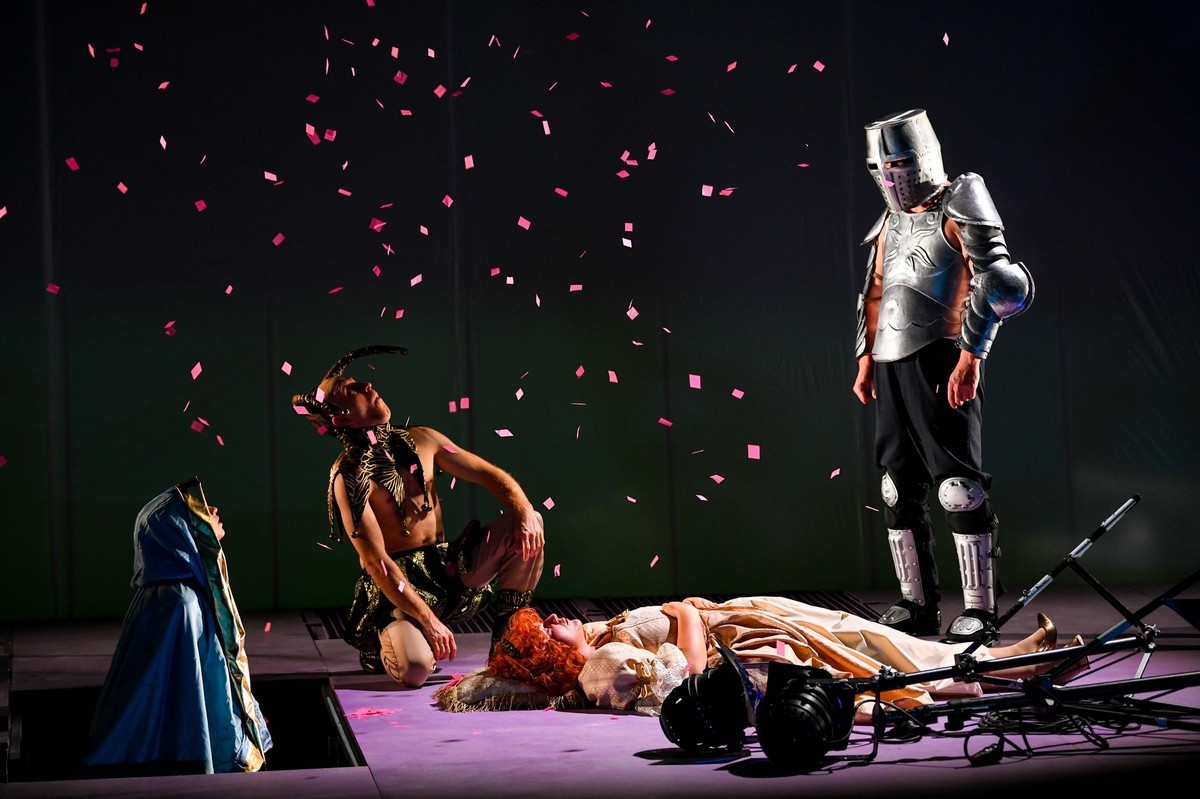
Bocsárdi László, four-time UNITER Award-winning director, brings to the stage the play of Portuguese theatre creator Tiago Rodrigues – for the first time in Hungarian. On November 14 at 7 p.m., the Harag György Company will present the first main-stage premiere of this season, directed by Bocsárdi László. The four-time UNITER Award-winning director is working in Satu Mare for the fifth time, now staging the Hungarian-language premiere of Tiago Rodrigues’s SOPRO, translated by Király Szabolcs and Dálnoky Réka.
Tiago Rodrigues is a Portuguese actor, director, playwright and producer. Internationally renowned, he is known for dissolving the boundaries between theatre and different realities, while questioning our relationship to social and historical phenomena. Throughout his career, he has sought to build bridges between cities and countries; he is both a host and an advocate of contemporary theatre. In 2023 he was appointed director of the Festival d’Avignon in France, the world’s largest theatrical and performing arts event. SOPRO premiered on July 7, 2017 at the Avignon Festival. During the rehearsal process, Rodrigues collected theatrical memories and anecdotes from Cristina Vidal, who served as prompter of Lisbon’s Teatro Nacional D. Maria II for 39 years.
“Someone drew my attention to Tiago Rodrigues after the text of this play appeared in Romanian. I read it, and it struck me deeply. I felt that this text is very personal to me, because it allows me to reflect on my own relationship with theatre. The play is the author’s desperate outcry that culture is in danger, expressed through theatre. We live in a time—globally—when culture seems pushed into the background, and those who steer the world have no interest in keeping culture, theatre, and art strong. They don’t want critically thinking people, but those who drift with the current and surrender their dignity. Rodrigues speaks of a situation where theatre no longer exists and tries to resurrect its spirit. In doing so, he expresses his own relationship with the theatre, and his thoughts resonate with my feelings about the state of culture. Without culture, there is no humanity, which is why making theatre now is much more important than it was half a century ago,” says director Bocsárdi László. “When reading the plays suggested by Bocsárdi László— this one only available in Romanian at the time — I immediately gravitated toward it. Primarily because in Méhes Kati we have an actress who can bring this role to life, and for whom this text practically cries out. I believe that in the classical and truest sense, this play offers a ‘rewarding role’ to an actress who has devoted her entire life — with excellence — to the service of Satu Mare theatre. It is no coincidence that Bocsárdi thought of staging it here with us, and I, too, immediately saw its potential. The play speaks — among many things — about humility; it speaks about the world through the perspective of theatre, poetically yet self-referentially. I felt that this production could become a life-metaphor for many — not only for theatre people! — and may also reveal something about Méhes Kati herself to our audience. While reading, many others came to mind as well — those who are no longer with us, from backstage staff to fellow artists. Whole lives devoted to the cause of theatre… This is a deeply autobiographical production that speaks about the world while strongly thematizing theatre itself — and it achieves a much broader resonance precisely because it unveils backstage secrets and talks about humility, the quality with which a person dedicates an entire life to a cause. One cannot miss how much of a personal, confessional gesture this is on the part of the director. I am grateful that he chose to tell this story here, with us. I am convinced that despite all its self-thematization, this play is not only about us theatre people, nor is it speaking to itself — but to everyone for whom culture, spirit, and a true cause served with humility have meaning — values that can be won… and lost,” says István Bessenyei Gedő, artistic director of the Harag György Company.
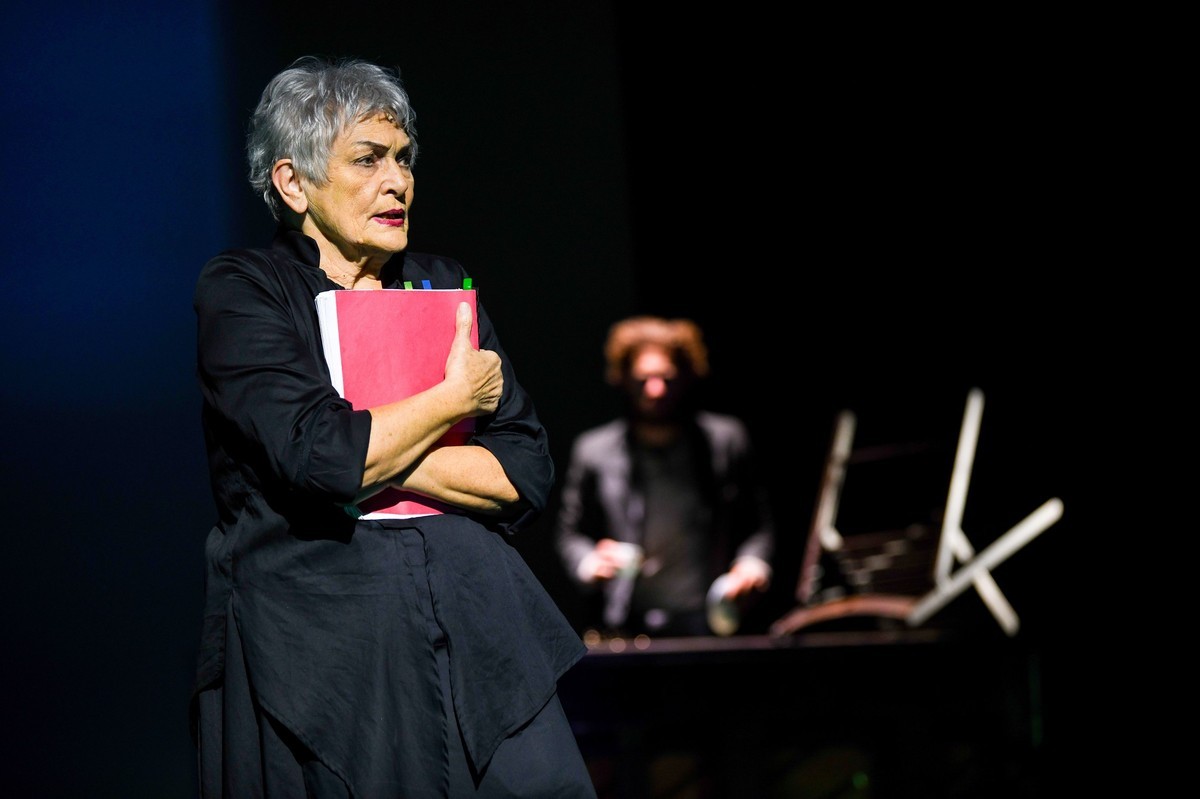
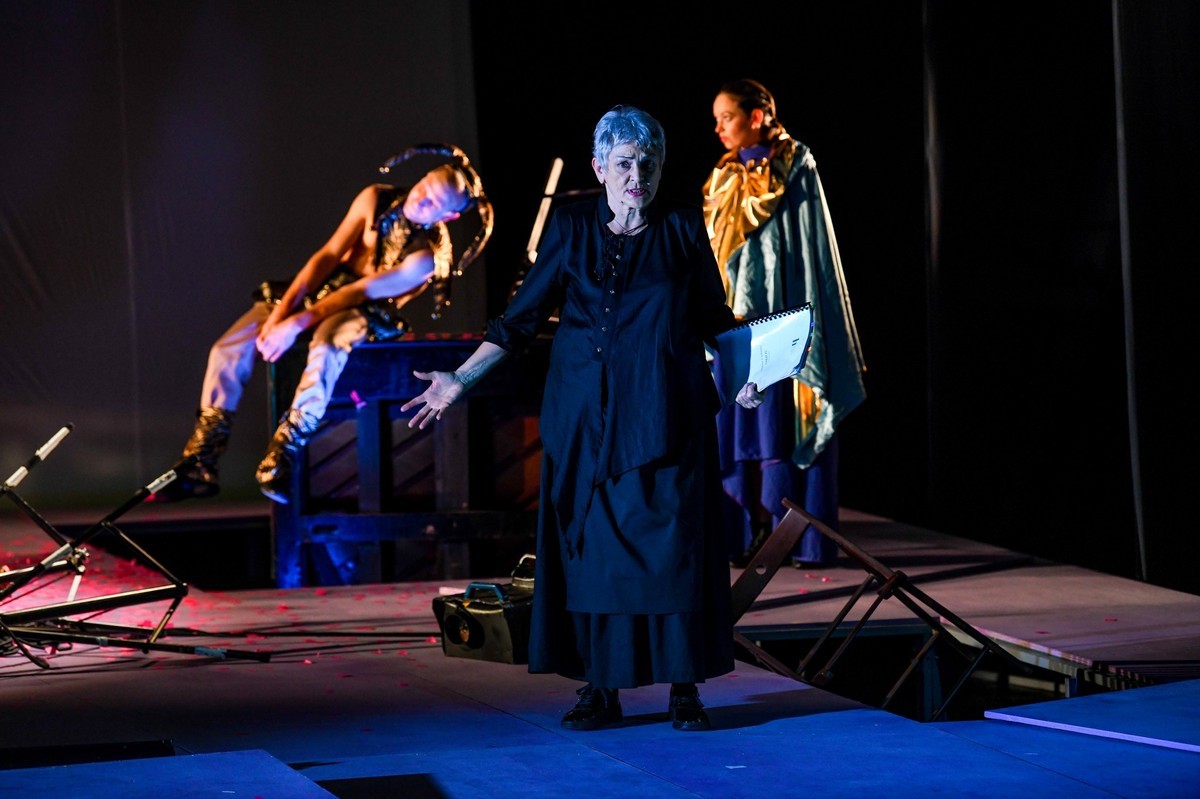
The performance itself pays tribute to the humble and invisible workers of theatre. Director Bocsárdi László dedicates the production to Veres Edit, stage manager of the Sfântu Gheorghe Theatre, with whom he has collaborated for more than three decades. In a theatre, we all breathe the same air. Technicians, actors, audience — all inhaling the same breath. The prompter is the one who breathes with the actors at every moment. They attentively watch every move, saving the actors when they are at their most vulnerable — when they get stuck in the text and stand exposed, as fragile human beings, under the spotlight. The prompter is the one who remains in darkness for an entire lifetime. In this play, for the first time in her life, the prompter steps onto the stage.
Cast: Méhes Kati, Szabó János Szilárd, Moldován Blanka, Nagy Csongor Zsolt, Orbán Zsolt, Diószegi Attila and Budizsa Evelyn. Dramaturg: Dálnoky Réka, set design: Bartha József, costume design: Szőke Zsuzsi, lighting design: Bányai Tamás, stage movement: Szabó Franciska, mask: Szabó János Szilárd, music: László Bakk-Dávid. After Friday’s premiere, the production will be shown on Saturday for holders of the Diószeghy Iván season ticket, and on Sunday for holders of the Nyiredi Piroska ticket, both at 7 p.m. Tickets for the premiere and the following performances are available, but only in very limited numbers. |
|















| © 2026. Szatmárnémeti Északi Színház Harag György Társulat - Theater Online |